

Union representation for Canada's Art Department varies by province, production type and collective agreement. From Production Designers and Art Directors to Set Decorators, Props, Construction, Paint and Greens, our guide explains which unions and guilds represent these positions across the country.
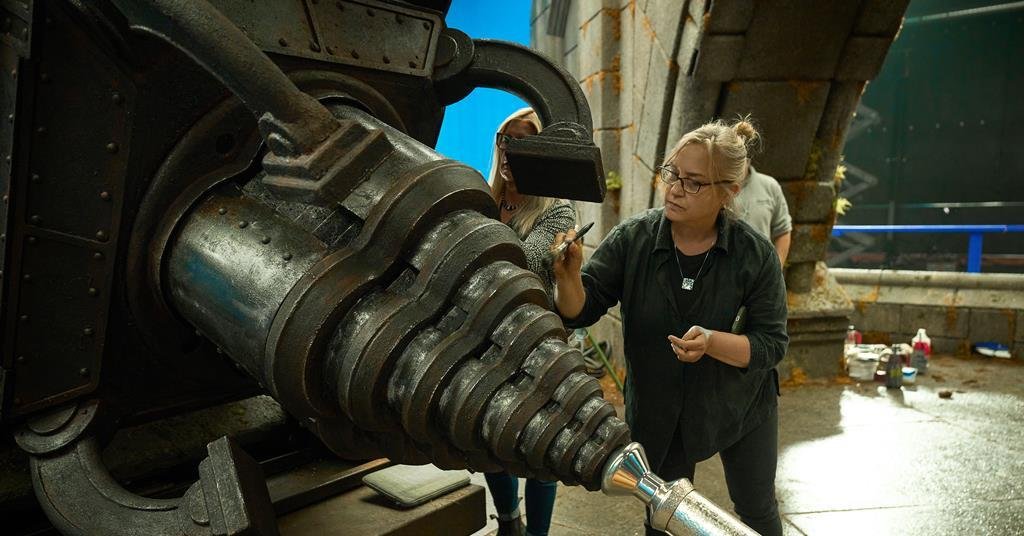
Production Designer Tamara Deverell on the set of Frankenstein | Photography by Ken Woroner
Which union represents the Art Department in Canada? The answer isn't always straightforward. It depends on where you're working, your job classification, and the collective agreement governing the production.
A production designer working in Ontario is generally represented by the Directors Guild of Canada (DGC), while someone doing the same job in British Columbia may work under an IATSE or ACFC West agreement. In Alberta, some art department classifications overlap between unions, while in Québec, representation can change depending on whether you're working in film, television, or commercials.
The differences extend to set decoration, props, construction, paint, greens, and other crafts working closely with production design.
We've put together this guide to help art department professionals understand who represents their work across Canada's provinces and territories, how union jurisdictions differ, and why collective agreements matter.
Understanding Union Jurisdiction and Collective Agreements
Two major labour organizations represent much of Canada's unionized production design and art department workforce.
The Directors Guild of Canada (DGC) is a national labour organization representing directors and various creative, production, and post-production professionals. Its art department classifications differ between district councils.
The International Alliance of Theatrical Stage Employees (IATSE) is an international labour union representing entertainment industry artists, technicians, and craftspeople. Its Canadian locals cover different departments and geographic jurisdictions.
Other unions, including ACFC West and NABET 700-M, represent film and television workers under their own collective agreements. Both are affiliated with Unifor, a national union representing workers across numerous industries.
Although these organizations may represent similar positions, their jurisdictions aren't necessarily the same.
Geographic Jurisdiction
Geographic jurisdiction refers to the territory in which a union or local represents workers. This may be an entire province, several provinces, or a particular region within one province.
For example, DGC Ontario represents designated art department positions throughout Ontario, while IATSE Local 634 serves particular regions of the province. IATSE Local 849 covers the three Maritime provinces rather than a single province.
Craft and Classification Jurisdiction
Craft jurisdiction concerns the particular positions a union represents.
In Ontario, DGC Ontario represents Production Designers, Art Directors, Set Designers, and other designated Art Department positions, while IATSE and NABET represent related crafts such as Set Decoration, Props, Construction, and Scenic Paint.
In Manitoba, many of these same positions, including Production Designers and Art Directors, are represented by one organization: IATSE Local 856.
What Is a Collective Agreement?
A collective agreement is a legally binding contract negotiated between a union or guild and an employer or employers' association.
It establishes employment conditions, including minimum rates of pay, working hours, overtime, benefits, and procedures for addressing workplace disputes. Agreements also identify the job classifications and types of productions they cover.
A single production may employ crew members represented by several unions under different collective agreements.
Conversely, two unions may represent the same job classification under separate agreements applying to different productions.
This is why knowing the province and job title may not be enough to determine which agreement applies.
British Columbia
British Columbia is an example of two unions representing many of the same Art Department classifications under different collective agreements.
Production Design & Art Direction
IATSE Local 891 — Production Designers, Art Directors, Assistant Art Directors, Set Designers, Draftspersons, Graphic Artists, Illustrators, Storyboard Artists, and other designated Art Department positions.
ACFC West, Unifor Local 2020 — Production Designers, Art Directors, Assistant Art Directors, Draftspersons, Graphic Artists, Art Department Coordinators, and Assistants under its agreements.
Set Decoration, Props, Construction, Paint & Greens
IATSE Local 891 — Represents these departments under its collective agreements.
ACFC West — Also represents a range of related crafts, including Set Decoration, Props, Construction, and Paint, according to its agreements and classifications.
How the Agreements Differ
IATSE 891 is part of the BC Council of Film Unions (BCCFU), alongside Teamsters Local 155 and ICG Local 669. Its Master Agreement establishes working conditions for a broad range of film and television productions, with rates structured by production type and budget.
ACFC West negotiates separate agreements. It has traditionally worked extensively on Canadian productions, Movies of the Week (MOWs), and smaller-budget features, although its agreements also cover television series and larger productions.
The important distinction is that both unions can represent similar Art Department positions, but under different contracts.
DGC British Columbia also represents film and television professionals, although the principal Production Design and Art Direction classifications are generally represented by IATSE 891 or ACFC West.
Relevant unions: IATSE Local 891 · ACFC West · DGC British Columbia
Alberta
Alberta has a particularly complex structure because Production Design and Art Department classifications are represented under both DGC and IATSE agreements.
Production Design & Art Direction
DGC Alberta — Production Designers, Art Directors, and other designated Art Department classifications.
IATSE Local 212 (Calgary) — Production Designers, Art Directors, Assistant Art Directors, Set Designers, Draftspersons, Graphic Artists, Illustrators, Art Department Coordinators, and Trainees.
IATSE Local 210 (Edmonton) — Production Designers, Art Directors, Set Designers, Graphic Artists, and other Art Department classifications under its film agreement.
Set Decoration, Props, Construction, Paint & Greens
IATSE Local 212 — Calgary and its regional jurisdiction.
IATSE Local 210 — Edmonton and its regional jurisdiction.
How the Agreements Differ
Unlike Ontario, where Production Design and most related crafts are generally divided between DGC and other unions, Alberta has overlapping representation for certain Art Department positions.
DGC Alberta operates under the DGC Standard Agreement's Alberta schedule, while IATSE 212 and 210 have their own agreements covering film and television technicians.
Previous DGC Alberta agreements have included provisions addressing workers who belong to another union and the conditions under which overlapping Art Department representation may occur.
That doesn't necessarily mean a Production Designer or Art Director can freely choose which agreement applies. The employer's agreement, job classification, and applicable contractual provisions determine the arrangement.
Because these provisions can change between agreements, Alberta professionals should check the current contract before accepting work.
Relevant unions: DGC Alberta · IATSE Local 212 · IATSE Local 210
Saskatchewan
Saskatchewan is served by DGC Saskatchewan and two IATSE locals divided geographically between Regina and Saskatoon.
Production Design & Art Direction
DGC Saskatchewan — Production Designers, Art Directors, Assistant Art Directors, Set Designers, and other Art Department positions covered by its provincial schedule.
Related Crafts
IATSE Local 295 (Regina) — Motion picture and entertainment technicians in Southern Saskatchewan, subject to the classifications covered by its agreements.
IATSE Local 300 (Saskatoon) — Motion picture and entertainment technicians in Northern Saskatchewan, subject to the classifications covered by its agreements.
How the Agreements Differ
DGC Saskatchewan operates under a provincial schedule of the DGC Standard Agreement, which establishes conditions for its designated Art Department classifications.
IATSE Locals 295 and 300 are regional mixed locals representing technicians across motion pictures and live entertainment.
Unlike a dedicated motion picture local with numerous published craft departments, their individual production classifications may depend on the agreement in place.
For Set Decoration, Props, Construction, Paint, and Greens positions, workers should confirm coverage directly with the appropriate local rather than assume every classification is represented in the same way as in neighbouring provinces.
Relevant unions: DGC Saskatchewan · IATSE Local 295 · IATSE Local 300
Manitoba
Manitoba has a different structure from Ontario, with IATSE Local 856 representing both Production Design and the related production crafts.
Production Design & Art Direction
IATSE Local 856 — Production Designers, Art Directors, Assistant Art Directors, Set Designers, Draftspersons, Graphic Designers, Storyboard Artists, Art Department Coordinators, and other designated positions.
Set Decoration, Props, Construction, Paint & Greens
IATSE Local 856 — Represents these departments under its film and television agreements.
How the Agreements Differ
IATSE 856 maintains an extensive list of motion picture classifications across the Art Department and related crafts.
DGC Manitoba also represents directors and designated production professionals, but the presence of a DGC district council does not mean Production Designers and Art Directors fall under its jurisdiction in the same way they do in Ontario.
Manitoba is a useful illustration of why national union affiliation alone doesn't establish who represents a particular job.
Relevant unions: IATSE Local 856 · DGC Manitoba
Ontario
Ontario generally separates Production Design and Art Direction from the technical and craft departments that help realize the production's visual environments.
Production Design & Art Direction
DGC Ontario — Production Designers, Art Directors, Assistant Art Directors, Set Designers, Graphic Designers, and other designated Art Department classifications throughout Ontario.
Set Decoration, Props, Construction, Paint & Greens
IATSE Local 873 — Represents these crafts under its film and television agreements, primarily within its Toronto-based jurisdiction.
IATSE Local 634 — Represents motion picture technicians and craftspeople in its regional jurisdiction, including Northern Ontario and the Ottawa area.
NABET 700-M UNIFOR — Represents Set Decoration, Props, Construction, Paint, and other production crafts under separate agreements.
How the Agreements Differ
DGC Ontario represents designated Production Design and Art Direction positions under its collective agreements.
IATSE 873, IATSE 634, and NABET 700-M represent other production crafts under their respective contracts.
This means a Production Designer represented by DGC Ontario may work alongside a Set Decorator represented by IATSE or NABET on the same production.
There is also an important geographic distinction.
DGC Ontario's Art Department jurisdiction extends throughout the province, including Northern Ontario. The presence of IATSE 634 in Northern Ontario does not automatically transfer Production Designer, Art Director, or Set Designer classifications from DGC Ontario to that local.
Some industry directories refer broadly to an IATSE local's “Art Department,” but that label should not be confused with the precise classifications established by its collective agreement.
For Ontario workers, it is important to establish both the job classification and the particular agreement governing the production.
Relevant unions: DGC Ontario · IATSE Local 873 · IATSE Local 634 · NABET 700-M UNIFOR
Québec
Québec has its own labour structure, including distinct collective agreements for film, television, and commercial production.
Production Design & Art Direction
DGC Québec (CQGCR) — Production Designers (concepteurs artistiques), Art Directors (directeurs artistiques), Assistant Art Directors, Art Department Coordinators, Assistant Coordinators, Head Draftspersons, and Draftspersons under applicable agreements.
AQTIS 514 IATSE — Also represents certain Art Department-related classifications under specific agreements.
Set Decoration, Props, Construction, Paint & Greens
AQTIS 514 IATSE — Represents Decoration (Décors), Props (Accessoires), Construction, Paint (Peinture), Greens (Paysages), Sculpture and Moulding, and related crafts.
How the Agreements Differ
DGC Québec negotiates Art Department agreements with organizations including the Association québécoise de la production médiatique (AQPM).
Its 2025–2029 Art Department agreement identifies specific Production Design, Art Direction, coordination, and drafting classifications.
AQTIS 514 IATSE represents many of the crafts involved in constructing, dressing, and finishing sets. Some classifications associated with the Art Department can also appear under AQTIS agreements, depending on the production sector.
Commercial production introduces another distinction.
The Association des producteurs publicitaires (APP) has separate agreements with DGC Québec and AQTIS 514 IATSE, covering different classifications and responsibilities in advertising production.
As a result, the organization representing an Assistant Art Director or Art Department Coordinator on one type of production may not be the same under another agreement.
Québec demonstrates why the job title, the production sector, and the specific collective agreement all matter.
Relevant unions: DGC Québec · AQTIS 514 IATSE
Nova Scotia, New Brunswick & Prince Edward Island
The Maritime provinces share a regional labour structure through DGC Maritimes and IATSE Local 849.
Production Design & Art Direction
DGC Maritimes — Production Designers, Art Directors, Assistant Art Directors, Set Designers, Art Department Coordinators, and other designated Art Department positions under applicable agreements.
Set Decoration, Props, Construction, Paint & Greens
IATSE Local 849 — Represents Set Decoration, Props, Set Construction, Scenic Paint, Greens, and other motion picture crafts across all three provinces.
How the Agreements Differ
DGC Maritimes operates under the Maritimes schedule of the DGC Standard Agreement, covering its designated creative and production classifications.
IATSE Local 849 operates under separate agreements for motion picture technicians and craftspeople.
Unlike Saskatchewan, where two IATSE locals serve different regions within the province, IATSE 849's jurisdiction extends across Nova Scotia, New Brunswick, and Prince Edward Island.
This means a Production Designer and Set Decorator working in any of the three Maritime provinces will generally look to the same respective regional labour organizations, provided their production falls under the applicable agreements.
Relevant unions: DGC Maritimes · IATSE Local 849
Newfoundland & Labrador
Newfoundland and Labrador has its own DGC district council and IATSE motion picture local.
Production Design & Art Direction
DGC Newfoundland & Labrador — Production Designers, Art Directors, and other designated Art Department positions under its provincial agreement.
Related Crafts
IATSE Local 709 — Represents Set Decoration, Props, Set Construction, Scenic Paint, and other motion picture crafts.
How the Agreements Differ
DGC Newfoundland & Labrador operates under its schedule of the DGC Standard Agreement.
IATSE Local 709 maintains separate motion picture classifications and agreements for technicians and craftspeople working in the province.
Its published departmental list includes Set Decoration, Props, Construction, and Scenic Paint. Individual classifications not explicitly identified, including Greens, should be confirmed directly with the local.
The broad division between DGC design classifications and IATSE crafts resembles the structure found in Ontario and the Maritimes, although the agreements and membership requirements are distinct.
Relevant unions: DGC Newfoundland & Labrador · IATSE Local 709
Yukon, Northwest Territories & Nunavut
Canada's northern territories do not share one uniform Art Department labour structure.
Yukon
IATSE Local 891 identifies British Columbia and Yukon within its jurisdiction, although the applicable agreement must be confirmed for individual productions.
Northwest Territories & Nunavut
Art Department representation may depend on the production, the employer, and any agreements with unions or guilds operating in other jurisdictions.
How the Agreements Differ
Film and television productions working in the territories may employ local crew alongside workers travelling from other provinces.
Union agreements can apply through specific production arrangements, but this should not be interpreted as establishing permanent, identical jurisdiction across all three territories.
Before accepting work, crew members should confirm which agreement applies and whether visiting-crew permits or other requirements are necessary.
What Happens When You Work in Another Province?
Moving between provinces doesn't necessarily mean transferring your union membership, but it may require additional steps.
Being a DGC member in Ontario, for example, doesn't automatically make someone a member of IATSE 856 in Manitoba.
Similarly, a professional belonging to IATSE 891 in British Columbia may need to follow a different process when accepting work under another local's agreement.
Depending on the organization, options may include permittee status, sister-local arrangements, reciprocal agreements, or membership transfers.
These arrangements can differ substantially, and some require advance approval.
For anyone considering work outside their usual jurisdiction, the best starting point is to contact the relevant union or guild and review the agreement governing the production.
Why These Differences Matter
Understanding union representation is about more than knowing where to apply for membership.
Collective agreements shape the working conditions of the people who design, build, dress, and maintain the environments seen on screen.
They establish minimum compensation, working hours, overtime provisions, benefits, and other employment protections. They also help define the positions and responsibilities within a production.
Those arrangements can vary even when two people perform essentially the same job in different provinces.
For professionals moving between regions, or transitioning from non-union productions into unionized work, understanding these differences can help clarify expectations and identify the appropriate organization to contact.
Canada's screen industries also extend beyond productions governed by the major film and television collective agreements. Commercials, music videos, independent productions, and emerging forms of screen-based media operate under a variety of employment arrangements, including union and non-union structures.
The absence of a particular collective agreement does not mean those professionals are any less a part of Canada's production design community.
Finding Collective Agreements and Membership Information
Collective agreements are updated through negotiations, and job classifications or conditions may change over time.
For current information, we encourage professionals to consult the relevant union or guild directly.
The Directors Guild of Canada and IATSE Canada provide information about regional councils, locals, and collective agreements.
The Canadian Media Producers Association also provides access to numerous agreements negotiated with Canadian production unions and guilds.
For additional links to provincial organizations, professional associations, training programs, and industry resources, explore the CPD's Industry Resources directory.
Connecting Canada's Production Design Community
Although union representation differs across the country, Production Designers, Art Directors, Set Decorators, and the wider Art Department share many of the same professional interests, challenges, and goals.
The Canadian Production Design Association (the CPD) is a national, union-agnostic professional association bringing these professionals together across provincial boundaries, union affiliations, and production sectors.
The CPD is not a labour union or guild. We do not negotiate collective agreements, administer union contracts, or determine labour jurisdiction. Our role is different, but complementary to the work of the unions and guilds representing Canada's film and television workforce.
We focus on advancing production design through professional advocacy, education, mentorship, sustainability, and greater recognition of the people whose work shapes the visual worlds of Canadian screen productions.
We hope this guide helps make the differences between union jurisdictions and collective agreements easier to understand. As agreements evolve, we'll continue working to keep this resource accurate and useful.
If you notice an omission or information that needs clarification, we'd welcome your input.
This article is intended as a general reference and does not constitute legal advice or an official determination of labour jurisdiction. Representation, classifications, and membership requirements are governed by the applicable collective agreements and may change. For authoritative information about a particular position or production, contact the relevant union or guild.
Last updated: November 2026.
